Bridging Quick Sign-Ups and Personalized Perks Across Athletic Disciplines and Gaming Variants
Lars Sullivan · Nov 12, 2026

Bridging Quick Sign-Ups and Personalized Perks Across Athletic Disciplines and Gaming Variants
Operators across multiple regions have developed systems that connect single registration processes directly to reward structures tailored for specific sports such as football, tennis, horse racing, and basketball alongside casino formats including slots, poker, and live dealer tables, with data from November 2026 showing continued expansion in these integrated models. Registration flows now capture user preferences at signup, then route those details into incentive engines that adjust bonus types, wager requirements, and payout schedules based on the chosen activity, whether that involves live event odds or virtual table games.
How Registration Data Shapes Incentive Structures
Platforms collect details during initial account creation, including preferred sports disciplines and casino variants, then apply algorithms that generate offers matching those selections without requiring separate logins or additional verifications. According to reports from the American Gaming Association, these unified entries have streamlined access while allowing operators to segment rewards, such as free bets for tennis matches or deposit matches for slot sessions, all derived from the same profile data entered once at the start. Observers note that such linkages reduce friction for users moving between athletic events and gaming tables, since the system recognizes activity history and adjusts incentives automatically rather than resetting for each category.
One implementation involves mapping registration fields to incentive categories where football enthusiasts receive odds boosts tied to league schedules, whereas casino players see tailored spins or cashback on table games. Researchers at institutions tracking digital gambling patterns, including studies referenced through Canadian regulatory summaries, have documented how these connections maintain compliance with regional rules while expanding participation across formats. The approach relies on backend databases that link user inputs to dynamic reward pools, ensuring that a single verification step unlocks options scaled to individual selections instead of generic promotions applied uniformly.
Cross-Discipline Applications in Practice
Systems operating in late 2026 demonstrate this linkage through examples where basketball bettors completing registration gain access to quarter-specific incentives that later extend to roulette or blackjack variants based on prior engagement metrics. Data indicates that operators track transitions from sports to casino play within the same account, then refine future offers accordingly without prompting users for repeated information. Such mechanics appear in platforms serving diverse markets, where horse racing participants encounter incentives that transition smoothly into poker tournament entries or slot progressives, all governed by the initial registration parameters.
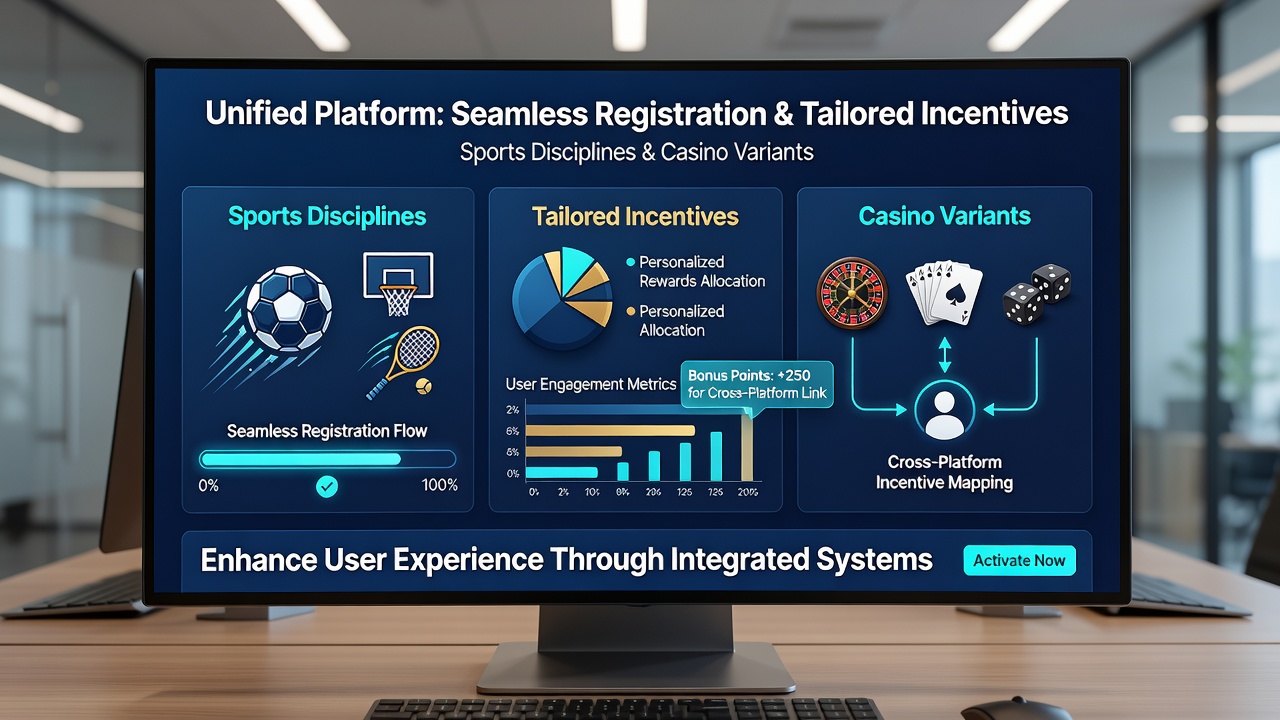
Industry reports highlight that these integrations support volume across both real-event and simulated gaming, with registration serving as the common entry that populates separate but connected reward streams. For instance, tennis-focused users might receive match-day credits that convert into live dealer bonuses, while slot enthusiasts see registration-derived loyalty points applied to upcoming sports wagers. The process avoids redundant steps because the core profile remains consistent, allowing the incentive layer to handle variations by discipline and variant through predefined rulesets rather than manual adjustments.
Technical and Regulatory Considerations
Developers achieve these connections via APIs that synchronize registration databases with incentive management tools, enabling real-time updates as users engage across categories. Figures from sources like the Australian Communications and Media Authority outline how such architectures comply with local licensing by maintaining separate audit trails for sports and casino segments even when accessed through one account. Observers point out that November 2026 trends show increased adoption in jurisdictions outside primary European markets, where regulators emphasize transparent data handling during the initial signup phase to support tailored yet verifiable reward distribution.
Case examples include platforms that embed preference selectors at registration, then deploy those choices to generate sport-specific multipliers or casino variant cashback rates. This method connects athletic disciplines like basketball quarters or horse sprints with casino rounds without creating parallel accounts, since the unified entry feeds all downstream calculations. Research indicates that maintaining these linkages requires robust encryption and consent protocols to align with broader data protection standards across regions.
Conclusion
Integration of seamless registrations with customized incentives continues to evolve as operators refine connections between sports disciplines and casino variants through shared user profiles. Evidence from multiple regulatory and industry bodies shows these systems operating at scale by November 2026, with registration serving as the foundational step that populates activity-specific rewards across football, tennis, slots, and table games. The structure supports movement between categories while preserving distinct compliance paths for each segment.